Human Hair Extensions

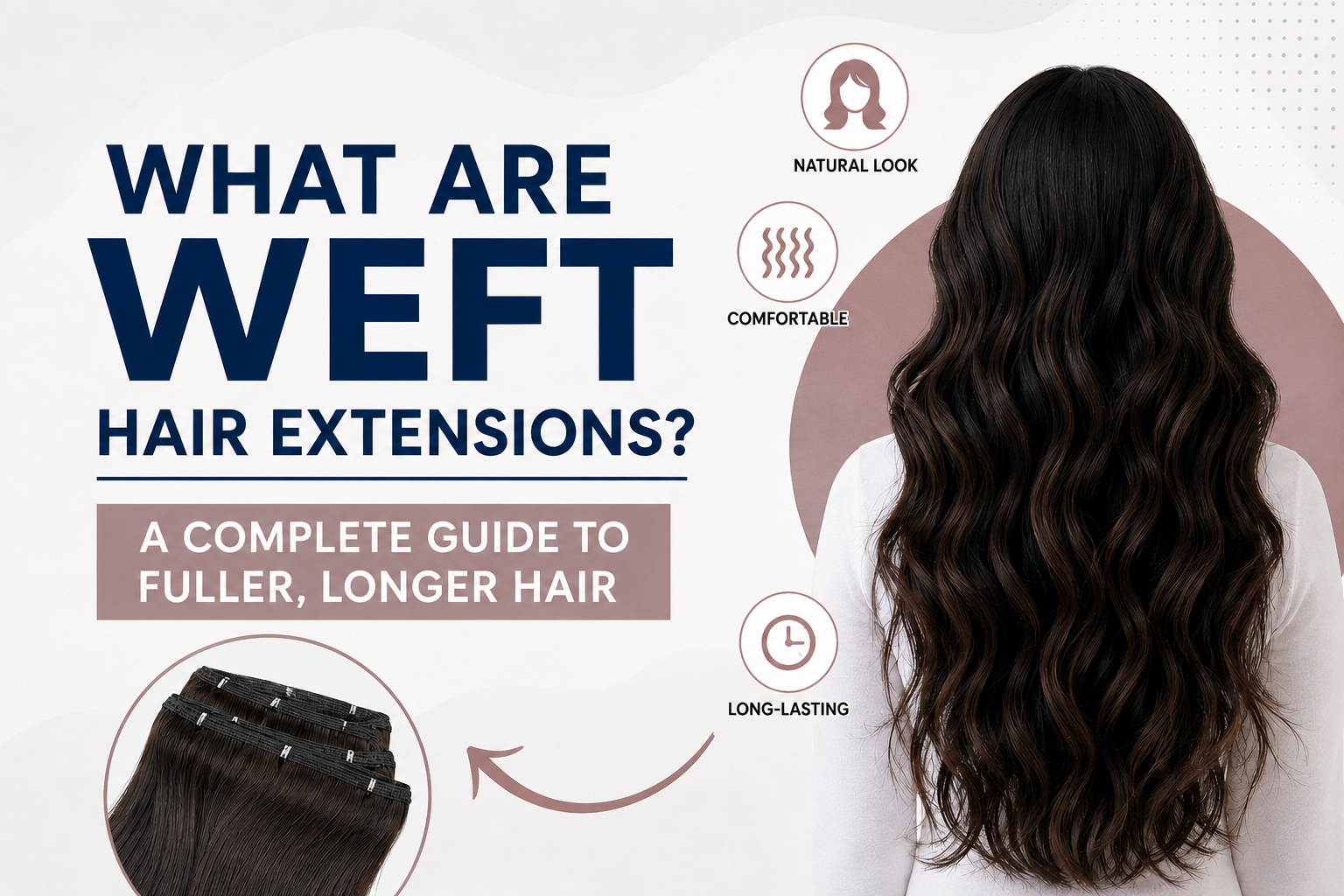
What Are Weft Hair Extensions? A Complete Guide to Fuller, Longer Hair

What Are Weft Hair Extensions A Complete Guide to Fuller, Longer Hair

Hair Extensions have become one of the most popular ways to add length, volume, & versatility. Without waiting for months for natural hair to grow.

Among the many options available, weft extensions are a favourite because they offer a natural-looking result, long-lasting wear and flexibility for different hair types and styles. 

So, what are weft hair extensions, really? A weft is a row of hair strands sewn or bonded together along one thin seam, almost like a hem on fabric. That strip gets attached to your real hair – sewn in, taped in, clipped in – and once it’s blended properly, it just looks like natural hair. 

If you’re wondering what the term ” weft ” means before all this got tangled up with beauty terminology, it’s borrowed from weaving. On a loom, the weft is the thread running side to side through the vertical warp threads. 

Hair wefts use the same logic – strands woven or stitched along a horizontal track, so you get one continuous piece instead of fiddling with loose strands one at a time. 


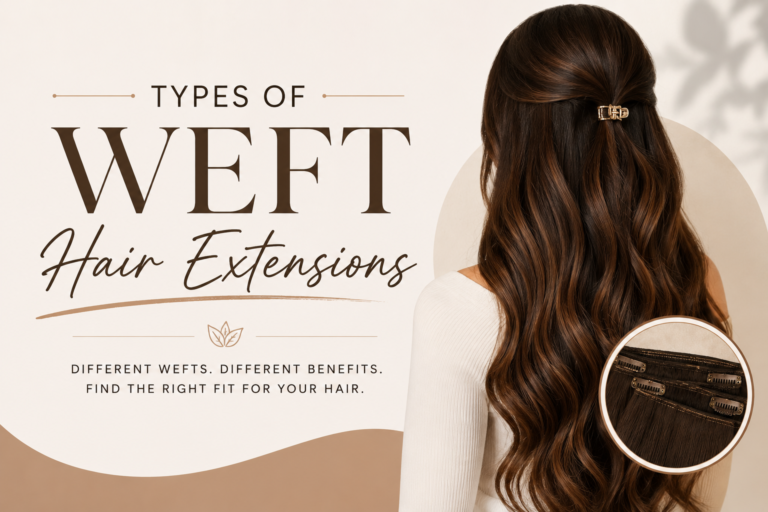
Types of Weft Hair Extensions

Types of Weft Hair Extensions


Not all wefts are built the same, and this is where people often get steered wrong.

By construction:

  • Hand-tied wefts – Each strand individually knotted onto a thread. Slower process, thinner result, sits flatter against the scalp. Easier to hide if you wear your hair up often.
  • Machine wefts – sewn by machine along a thicker seam. Faster to produce, sturdier, usually cheaper. These machine-weft hair extensions are often the more sensible pick for regular clip-in use rather than a long salon install.

Neither type is automatically “better” – they’re just suited to different jobs.

By install method:

  • Sew-in wefts – braided into your natural hair (usually cornrows), then stitched onto the braid with a needle and thread. Old-school, a little tedious to sit through, but it holds for weeks without budging.
  • Tape-in wefts – a thin strip with medical-grade adhesive, sandwiched around a small section of your own hair. Quick in, quick out, usually reapplied every six to eight weeks as your hair grows.
  • Clip-in wefts – small clips or snap combs run along the weft, and you can wear them yourself at home – no appointments required with your stylist. 
  • Bead-and-weft combos – some stylists pair wefts with bead-based attachment points instead of tape or thread, spreading tension more evenly across the scalp. Useful if you’ve got a sensitive head.

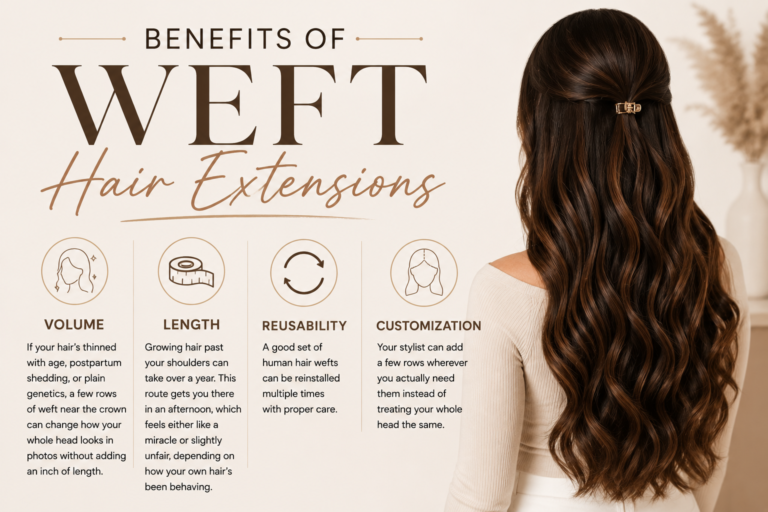
Benefits of Weft Hair Extensions

Benefits of Weft Hair Extensions


Most people assume this is purely a length thing. It’s not, and that assumption undersells the category.

  • Volume – If your hair’s thinned with age, postpartum shedding, or plain genetics, a few rows of weft near the crown can change how your whole head looks in photos without adding an inch of length.
  • Length – growing hair past your shoulders can take over a year. This route gets you there in an afternoon, which feels either like a miracle or slightly unfair, depending on how your own hair’s been behaving.
  • Reusability – a good set of human hair wefts can be reinstalled multiple times with proper care.
  • Customization – your stylist can add a few rows wherever you actually need them instead of treating your whole head the same.

Human Hair Extensions Weft vs. Synthetic Wefts


extensions weft options are made from real hair so that they can be curled, straightened & styled just like your own hair, although they get slightly dulle over the months, however, they won’t suddenly start looking artificial. They do cost more than the synthetic ones, but they blend in especially in the daylight. Overall, they are worth the investment. 

Synthetic versions are cheaper and often pre-styled out of the packet. The catch:

  • Heat tools can melt them – no curling iron, no flat iron.
  • The shine under sunlight or camera flash tends to look a touch too glossy, almost like doll hair.
  • They generally don’t last past one or two events before looking worn.

The right choice depends on your budget, styling needs, and how often you plan to wear the extensions. Synthetic options are more affordable, while human hair extensions offer a more natural appearance and greater versatility for long-term use. 

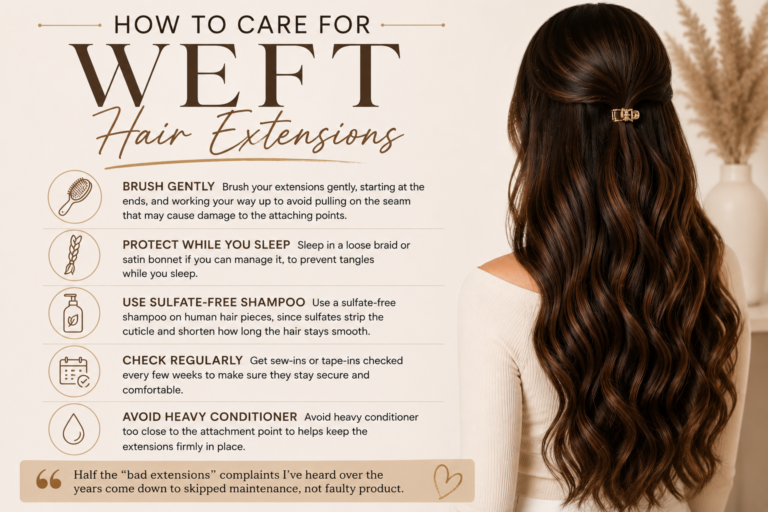
How to Care for Weft Hair Extensions

How to Care for Weft Hair Extensions


Extensions aren’t delicate, but they need a bit of care.

  • Brush your extensions gently, starting at the ends, and working your way up to avoid pulling on the seam that may cause damage to the attaching points.
  • Sleep in a loose braid or satin bonnet if you can manage it, to prevent tangles while you sleep. 
  • Use a sulfate-free shampoo on human hair pieces, since sulfates strip the cuticle and shorten how long the hair stays smooth.
  • Get sew-ins or tape-ins checked every few weeks to make sure they stay secure and comfortable. 
  • Avoid heavy conditioner too close to the attachment point to helps keep the extensions firmly in place. 

Half the “bad extensions” complaints I’ve heard over the years come down to skipped maintenance, not faulty product.

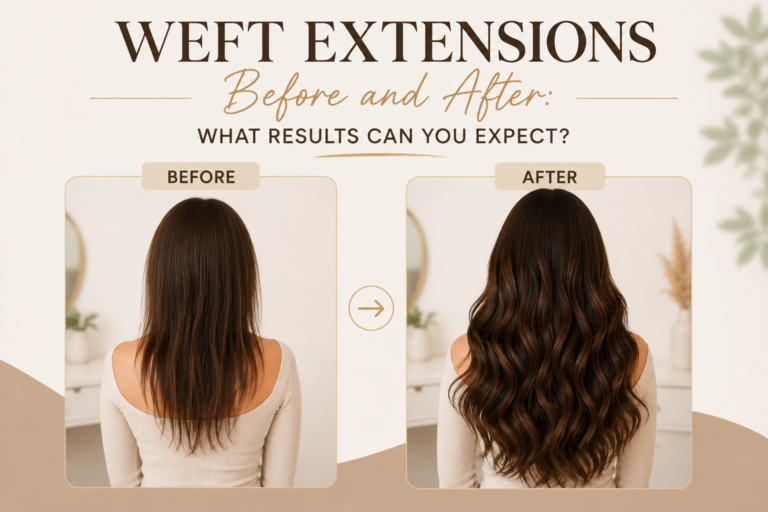
Weft Extensions Before and After: What Results Can You Expect?


This is the part people care about more than any terminology lesson – once they know what wefts are capable of, the before-and-after is what convinces them to actually try it.

Right after install, the most obvious shift isn’t always length – it’s texture and movement. Flat, fine hair that used to lie there suddenly has weight and bounce, because the added strip is physically adding mass that wasn’t there before.

A few things to expect from weft extensions before and after results:

  • Noticeably fuller crown and mid-lengths – this is usually where the difference shows up most, more than at the very ends.
  • A change in how hair moves, not just how long it looks.
  • Color blending that should be close to invisible if the weft was matched properly beforehand.

That crown-and-mid-length pattern tracks, since volume tends to be the first thing that thins with age or hormonal shifts.

Conclusion


Once you actually understand what wefts are and how each method works, the whole, this thing doesn’t feel like a mystery anymore. It’s a practical way to add length or volume without years of patient hair growth or risky chemical treatments. 

Which type you go with – hand-tied, machine-sewn, tape-in, clip-in – comes down to your budget, your patience to upkeep, and how often you want to change things up. If you are considering Extensions Company it’s good idea to look at real client results, and you’ll get a clearer answer. 

FAQ's

Are human hair extensions weft better than synthetic extensions?

For everyday wear, yes. They look more natural, can be styled with heat tools and last longer than synthetic extensions.

Hand-tied human hair wefts tend to work best. The seam’s thinner and lighter, so it doesn’t drag on delicate natural strands.

With human hair, yes – heat tools are fine, and light toning usually works too. Synthetic wefts can’t take color and will melt under heat.

Sew-ins and tape-ins usually need repositioning every six to eight weeks. The hair itself can be reused for six months to a year with decent care.

Leave a Reply

Your email address will not be published. Required fields are marked *