Human Hair Extensions

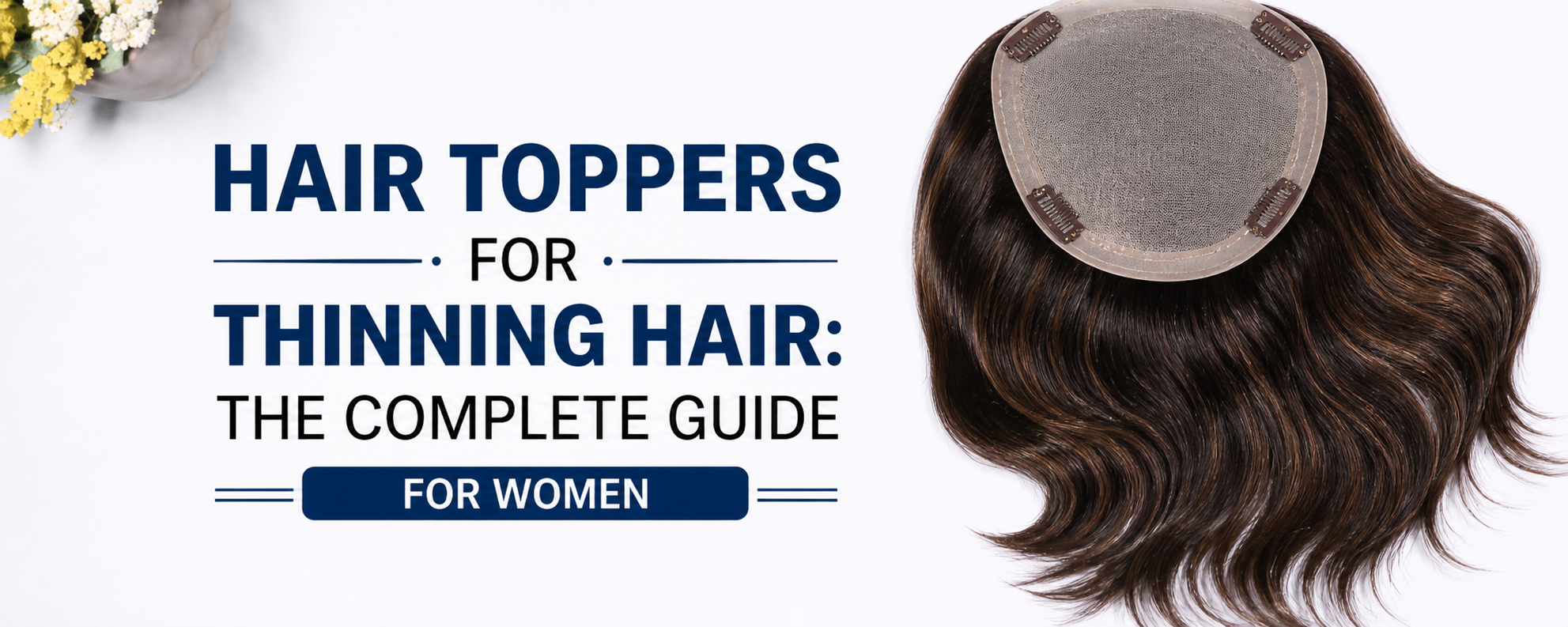
Hair Toppers for Thinning Hair: The Complete Guide for Women

Hair Toppers for Thinning Hair

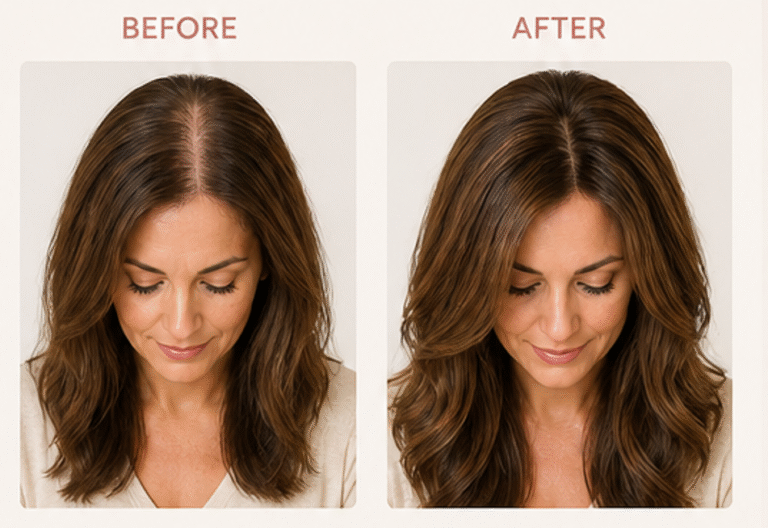
If you've noticed your part getting wider or your crown looking sparse, you're not alone. Over 55% of women experience some degree of hair loss or thinning during their lifetime, making it one of the most common concerns across age groups. The good news? Hair toppers for thinning hair have emerged as one of the most practical, non-surgical solutions available — instantly restoring volume, coverage, and confidence without the full commitment of a wig.

This complete guide covers everything you need to know about hair toppers for thinning hair — from what they are and the types available, to how to choose the right size, base type, and style for your hair and lifestyle.


What Are Hair Toppers for Thinning Hair?

Hair toppers for thinning hair — sometimes called wiglets, crown pieces, or top hairpieces — are partial hairpieces designed to sit on the top of your head and cover the crown, parting area, or front hairline. Unlike a full wig that covers the entire scalp, a hair topper only covers the area where you need it most, blending seamlessly with your natural hair on the sides and back.

Hair toppers are typically attached using pressure-snap clips, double-sided tape, or adhesive, depending on the base style. They come in a wide range of sizes, base types, hair materials, lengths, and colors — making it possible to find a match that feels completely natural.

Why choose a topper over a wig? Hair toppers are lighter, more breathable, and easier to blend. If you still have healthy hair on the sides and back of your head but are experiencing thinning at the crown or parting, a topper is almost always the better option.


Signs You Might Need a Hair Topper

Hair toppers for thinning hair are ideal when you notice any of the following:

  • A widening part line or increased scalp visibility at the crown
  • Reduced volume and flatness at the top of the head
  • Visible bald patches or thinning near the front hairline
  • Hair loss resulting from hormonal changes, postpartum shedding, aging, or stress
  • Thinning due to conditions like androgenic alopecia (female pattern hair loss) or diffuse thinning

If extensions are no longer providing enough coverage at the roots — or if there isn't enough hair density to conceal attachment points — a hair topper may be the ideal next step.


Types of Hair Toppers for Thin Hair

Types of Hair Toppers for Thin Hair

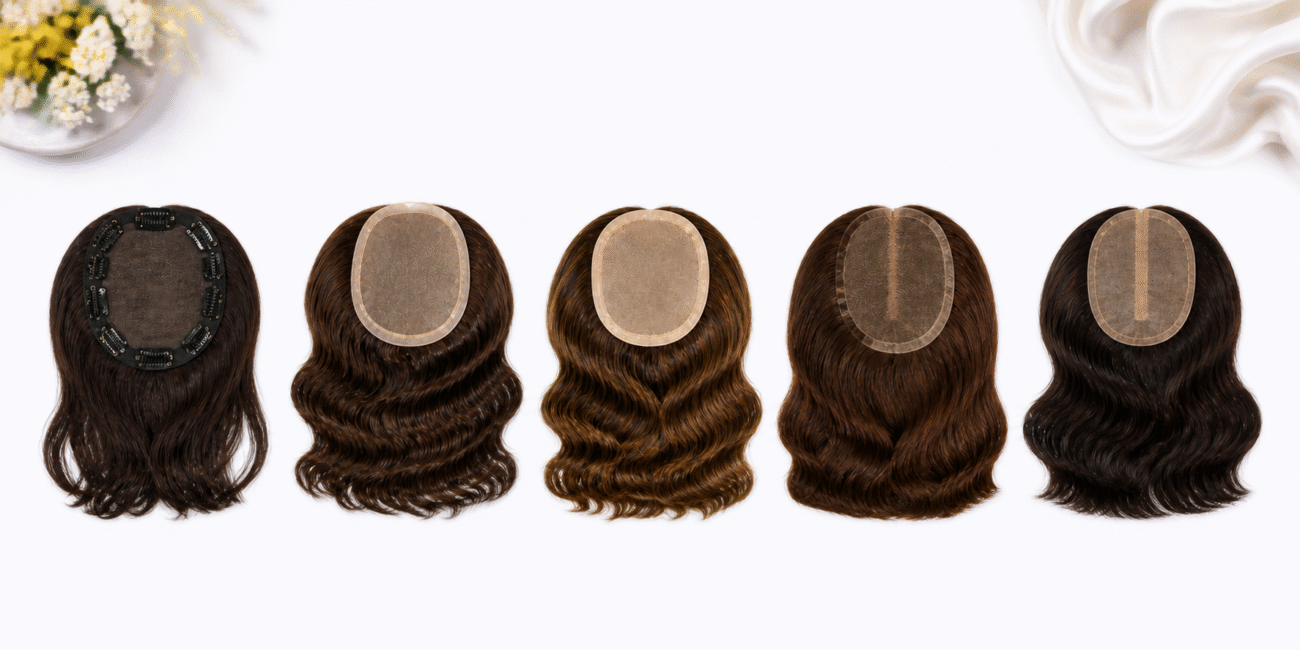
When exploring hair toppers for thin hair, you'll primarily encounter three material categories: synthetic, human hair, and heat-friendly synthetic. Each comes with its own set of advantages depending on your budget, lifestyle, and styling preferences.

1. Synthetic Hair Toppers

Synthetic toppers are pre-styled and made from man-made fibers that hold their shape right out of the box. They are generally more affordable and require minimal maintenance, making them a popular entry point for first-time topper wearers.

Key benefits:

  • Budget-friendly — typically the most affordable option
  • Hold their style without daily restyling
  • Low maintenance — easier to care for
  • Lightweight and comfortable for all-day wear

Limitations:

  • Cannot be heat-styled with curling irons or straighteners
  • Cannot be colored or dyed
  • May not blend as naturally with fine or textured hair

2. Human Hair Toppers for Thinning Hair

Human hair toppers for thinning hair are widely considered the gold standard. Made from 100% real — often Remy — human hair, these toppers can be washed, heat-styled, and even colored just like your natural hair. The cuticles are kept intact and aligned, ensuring natural movement and minimal tangling.

Key benefits:

  • Most natural look and feel — virtually indistinguishable from bio hair
  • Can be styled with heat tools (curlers, flat irons, blow dryers)
  • Can be colored or custom-colored to match your roots
  • Longer lifespan — with proper care, can last 1–3 years

Limitations:

  • Higher upfront cost
  • Requires more care and maintenance than synthetic options

Pro tip: For women with thinning hair who want long-term, seamless blending, human hair toppers for thinning hair are worth the investment. They style alongside your natural hair, making the transition nearly invisible.

3. Heat-Friendly Synthetic Toppers

A great middle-ground option, heat-friendly synthetic toppers are made from advanced synthetic fibers engineered to withstand low to moderate heat. You can use a flat iron or curler at low temperatures to restyle them — offering more flexibility than standard synthetics without the full cost of human hair.

  • Ideal for women who want some styling freedom on a budget
  • More versatile than standard synthetic toppers
  • Not as durable or heat-resistant as human hair — always use low heat settings

 

Hair Topper Base Types Explained

Hair Topper Base Types Explained

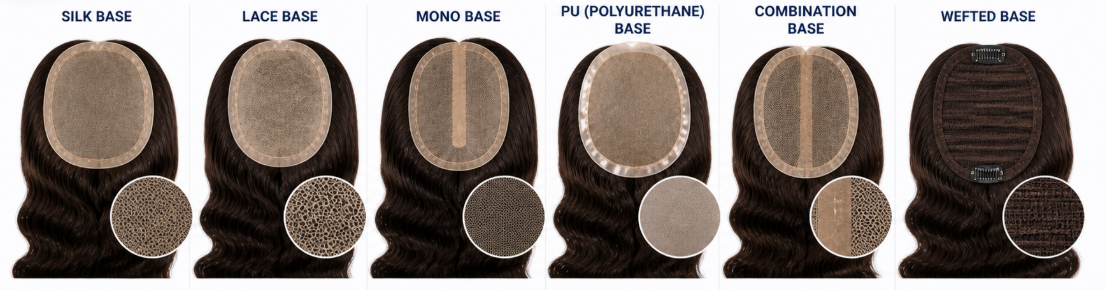
The base of your hair topper is the foundation that sits on your scalp. It determines how natural the hairline looks, how comfortable the topper feels, and how it's attached to your head. Here are the most common base types for women hair toppers:

Monofilament Base

Each strand of hair is individually hand-sewn to a thin, skin-toned mesh, allowing multi-directional parting. This creates a very realistic scalp appearance and is ideal for women who like to change their part.

Silk Top Base

A silk base features a top layer of silk fabric with hair sewn underneath — creating the appearance of hair growing directly from the scalp. Silk top bases are extremely realistic and durable. They are an excellent choice for women experiencing crown thinning or bald patches. Explore the Miraj Base for a high-quality silk base option.

Lace Front Base

A lace front topper features an ultra-thin, sheer lace panel at the hairline, mimicking a natural hairline edge. These are ideal for women with frontal thinning or a receding hairline. The lace is nearly invisible against the scalp.

Wefted / Clip-In Base

A more basic base made of wefted hair attached to a fabric or silicone strip with clips. These are typically the most affordable option and work best for mild thinning where volume — rather than scalp coverage — is the primary goal.

Skin / Poly Base

A thin polyurethane base that mimics the look of skin. Hair is attached to the underside, creating a seamless, flush appearance against the scalp. This base is great for tape-based attachment methods.


Choose the Right Size & Coverage Area

How to Choose the Right Size & Coverage Area

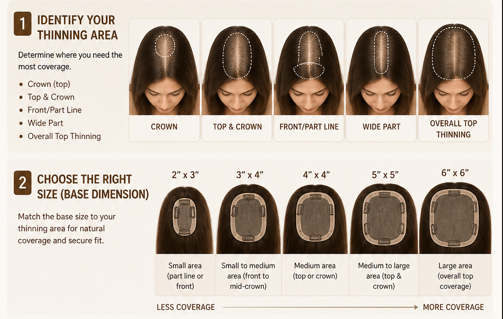
Choosing the correct size is critical when shopping for hair toppers for thinning hair. A topper that's too small won't cover the thinning area fully; one that's too large may not have enough surrounding natural hair to grip onto.

How to measure your thinning area:

  1. Use a soft fabric measuring tape.
  2. Measure the thinning area from front to back (length).
  3. Measure side to side (width).
  4. Add at least ½ inch to 1 inch on all sides to ensure the clips have enough natural hair to grip.

General sizing guide:

  • Small base (3x3" to 4x4"): Mild thinning at the crown or parting line
  • Medium base (5x5" to 6x6"): Moderate thinning across the crown
  • Large base (7x7" to 8x8"): Significant thinning across the top of the head

For more coverage options and to browse by size, visit our ladies hair toppers collection.

Top-Rated Hair Toppers: What Makes Them Stand Out

With so many options on the market, what separates the top rated hair toppers from mediocre ones? Here are the key qualities to look for:

  • Natural scalp appearance: The base should mimic the look of a real scalp — monofilament and silk tops excel here.
  • Secure attachment: Quality toppers feature silicone-lined clips that grip without slipping or damaging the hair.
  • Seamless color matching: Top rated hair toppers come in a wide range of shades, including rooted and highlighted options.
  • Lightweight construction: A good topper should be comfortable enough for all-day wear without causing scalp fatigue.
  • High-quality hair fiber: Remy human hair with intact cuticles resists tangling and lasts significantly longer.
  • Versatile styling: The ability to heat-style, color, and customize is a major plus for achieving a truly personalized look.

A well-reviewed example is the Miraj Base Topper 25, which combines a realistic silk base with high-quality human hair for a natural finish.


Best Women's Hair Toppers by Hair Type & Lifestyle

The best hair topper for you depends on your unique hair type, the extent of your thinning, and how you live day to day. Here's a quick breakdown:

For Mild Crown Thinning or a Widening Part

  • Base size: Small to medium (3x3" to 5x5")
  • Best base type: Monofilament or silk top for realistic scalp appearance
  • Hair type: Human hair for natural blending and styling flexibility
  • Ideal for: Women who want subtle coverage that still allows free parting

For Moderate to Significant Thinning Across the Top

  • Base size: Large (7x7" to 8x8")
  • Best base type: Silk top with optional lace front for a natural hairline
  • Hair type: Human hair with 120–130% density
  • Ideal for: Women who need full top coverage while blending with natural side/back hair

For Frontal Hairline Thinning

  • Base type: Lace front topper — offers the most realistic hairline edge
  • Hair type: Human hair for the most natural look
  • Ideal for: Women experiencing recession or thinning along the forehead

For Busy, On-the-Go Lifestyles

  • Hair type: Heat-friendly synthetic — low maintenance, holds style throughout the day
  • Base type: Clip-in or monofilament for quick, secure application
  • Ideal for: Women who want grab-and-go ease without daily restyling

For Budget-Conscious Shoppers

  • Hair type: Standard synthetic or heat-friendly synthetic
  • Base type: Wefted clip-in base
  • Ideal for: First-time topper wearers or those who want to test the concept before investing in human hair
How to Wear & Blend a Hair Topper Naturally

How to Wear & Blend a Hair Topper Naturally

Even the highest-quality hair toppers for thinning hair won't look their best if they aren't applied and blended correctly. Here's how to get a seamless, natural finish:

Step 1: Prep Your Natural Hair

Lightly tease the hair at the root where each clip will attach. This creates grip and helps the topper stay secure throughout the day. Avoid applying heavy products to the roots before placing the topper.

Step 2: Position the Topper

Open all clips before placing the topper on your head. Align the front of the topper with your natural hairline or part. Press the clips down firmly — starting from the front and working toward the back.

Step 3: Blend the Edges

Use a wide-tooth comb or your fingers to blend the topper's hair with your natural hair. For human hair toppers, you can use a flat iron or curler at the ends to ensure the texture matches. Always style the topper to match your natural hair's texture for the day — if your natural hair is wavy, style the topper wavy too.

Step 4: Style as Normal

Human hair toppers for thinning hair can be blow-dried, curled, and straightened just like your own hair. Always apply a heat protectant before using any heated tools. Avoid applying dry shampoo or heavy products directly to the base, as this can clog the base material and reduce its longevity.


Care Tips to Extend Topper Life

  • Wash your topper every 10–15 wears, or when product buildup is visible at the base
  • Use a sulfate-free, gentle shampoo and a moisturizing conditioner
  • Store on a wig stand or in a silk bag to maintain shape and prevent tangling
  • Avoid sleeping in your topper — this significantly shortens its lifespan

•  Rotate clip placement slightly with each wear to prevent tension on the same hair follicles

Conclusion: Finding the Best Hair Topper for Your Needs

  • Hair toppers for thinning hair have transformed the way women manage hair loss — offering a discreet, natural-looking, and instantly effective solution. Whether you're dealing with a slightly widening part or more significant crown thinning, there is a hair topper designed exactly for your needs.

    The most important factors to consider are the location and extent of your thinning, your base type preference (monofilament, silk, or lace front), the hair material (human hair vs. synthetic), and the size of the coverage area. Human hair toppers for thinning hair remain the top-rated choice for their unmatched natural appearance, styling versatility, and durability — but heat-friendly synthetic options offer excellent value for those on a budget.

    Ready to find your match? Browse our full range of women hair toppers — curated for different coverage needs, base types, and budgets — and take the first step toward fuller, more confident hair.

Frequently Asked Questions About Hair Toppers for Thinning Hair

Are hair toppers good for thinning hair?

Yes - hair toppers for thinning hair are one of the most effective non-surgical solutions available. They provide targeted coverage exactly where the scalp is most visible — typically the crown, part, or hairline — while blending seamlessly with existing hair on the sides and back.

Which type of hair topper is best?

The best type depends on your coverage needs and lifestyle. For the most natural look and maximum styling freedom, human hair toppers for thinning hair with a silk top or monofilament base are widely considered the top rated hair toppers.

What is the most natural-looking hair topper?

The most natural-looking option is a human hair topper with a silk top base or lace front base. The silk base mimics the appearance of hair growing directly from the scalp, while the lace front creates an invisible, realistic hairline.

Can I wear a hair topper every day?

Yes, many women wear hair toppers for thinning hair every day. To minimize any potential stress on natural hair, rotate clip placement slightly with each wear, give your scalp regular breaks, and ensure both your natural hair and topper are kept clean and well-conditioned.

How long do hair toppers last?

With proper care, human hair toppers for thinning hair can last between 1 and 3 years. Synthetic toppers typically last 3–6 months with regular wear. Longevity depends on frequency of use, how well the topper is maintained, and the quality of the base and hair fiber.

Leave a Reply

Your email address will not be published. Required fields are marked *